
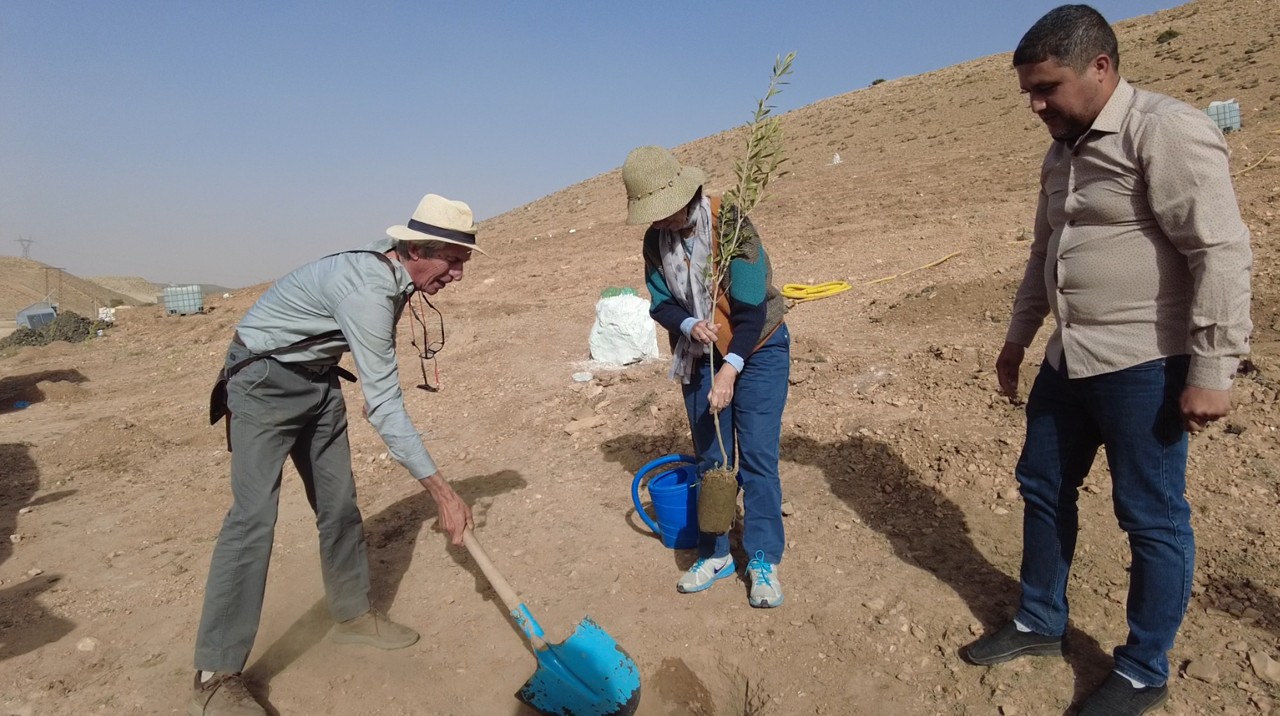
As evidenced by the cover image selected for this news post, Anna Spiteri and Eng. Dirk De Ketelaere enthusiastically took part in the planting of trees in Djelfa, known as the Gateway to the Sahara, which is located some 315 kilometres to the south of Algiers in Algeria.
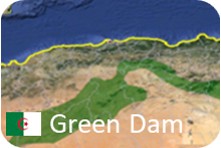
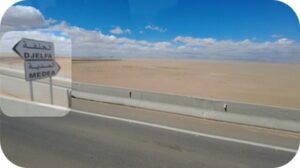
The area marks the site where Algeria’s flagship ‘Green Dam’ project to combat the advancement of the Sahara had been launched back in the 1970s, and where the industrial partner in the Mara-Mediterra consortium has been validating a novel, micro-ecosystem based afforestation protocol. Through this novel protocol, AMENHYD aspires to breathe a new lease of life in the Green Dam project, the progress of which slowed down because of a changing climate among other obstacles.
In this regard, is specifically noteworthy that the selection of the experimental site, which extends over 4 hectares, was not only because of its symbolic importance but driven also by the availability of treated wastewater from a nearby domestic wastewater treatment plant.
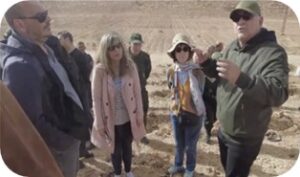
At the experimental site, Mr. Zanndouche Ouahid, Senior researcher within the National Institute of Forestry Research, explains that the afforestation protocol divides each plot of 1 hectare into 4 sub-plots: a plot in which the planted species are watered with treated wastewater, a plot in which soil enhancer obtained from the sludge of a wastewater treatment plant is added to the soil, a plot in which the species are both watered and soil enhancer is applied, and a final plot in which the species are planted without any further human intervention. AMENHYD estimates that it will take around 2 to 3 years for these experimental trials to point to the ’optimum’ protocol for afforestation.
However, Zanndouche emphasizes that the protocol is focused intentionally on the rehabilitation of the site to start with. The soil is poor in nutrients, hence the selection of nitrogen-fixing plant and tree species. Furthermore, the sludge obtained from the nearby wastewater treatment plant enables the recovery of 80-90% of phosphorous as struvite and compensates for the lack of phosphorous in the local soil. Once the species planted will reach maturity, efforts will be focused on the afforestation of the site, i.e. to re-introduce the species that were growing in this area before the onset of land and water degradation due to a changing climate.
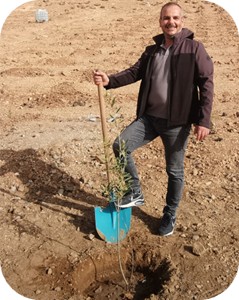
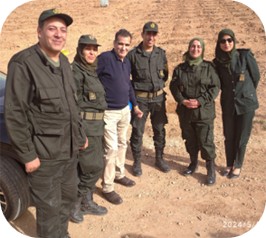
Following on these explanations, the project coordinator, Dr. Vasileios Takavakoglou, wasted no time and planted an oleander sapling, to a big round of applause from the partnership.
The ongoing efforts at the experimental site are being overseen by the Living Lab that was launched in May 2023, and which brings together the various entities that are involved in the micro-ecosystem based afforestation protocol adopted by AMENHYD: the General Directorate of Forests, the National Sanitation Agency (ONA), the National Institute of Forestry Research, the conservatory of forest of Djelfa and more.
Produced by Eng. Dirk De Ketelaere, this video clip brings snippets from Mara-Mediterra’s Fourth progress meeting and of the field trip which took place on, respectively, 29 and 30 April and 1 May 2024. Both events were co-hosted by AMENHYD, the Algeria partner in the consortium and ANVREDET, the national agency for the valorisation of research and technological development results. Aside from the tree planting at the experimental afforestation site, look out for the footage of the Mara-Mediterra Partnership under the tree that featured in the 1932 movie of Tarzan, the Ape Man.